

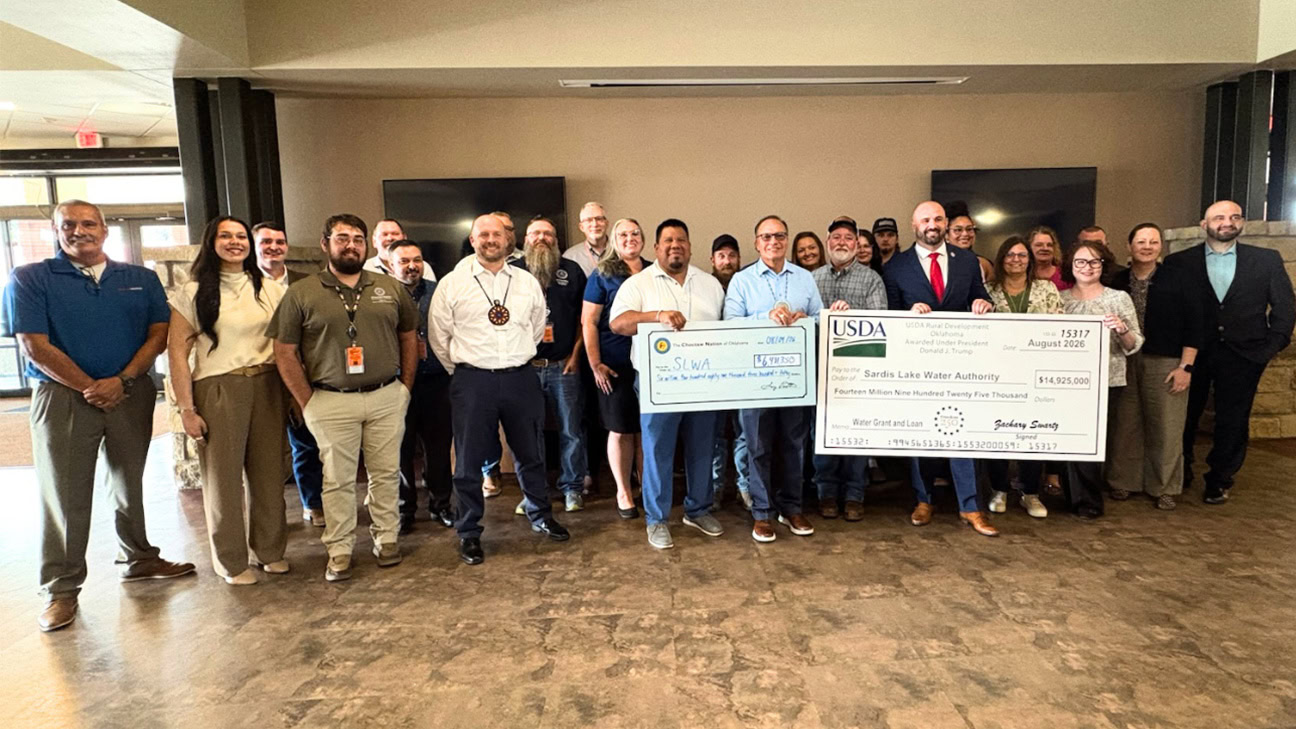
USDA, State, and Tribal Leaders Announce More than $30 Million Investment in Rural Water Infrastructure
Published August 4, 2026DURANT, Okla. — Representatives from the Choctaw Nation of Oklahoma, the United States Department of Agriculture (USDA), and the Oklahoma Water Resources Board gathered today for a check presentation announcing more than $30 million in funding to the Sardis Lake Water Authority (SLWA) for construction of a new water treatment facility.
“This $30 million investment in the Sardis Lake Water Authority demonstrates the strength of collaboration among federal, state, and tribal leaders to address critical infrastructure needs in rural Oklahoma,” said Gary Batton, Chief of the Choctaw Nation. “By supporting a new water treatment plant, we are helping ensure that residents and businesses, including schools, clinics, restaurants, and senior housing, maintain access to safe, reliable water. Funding at this level for water infrastructure in rural areas can be rare, and I am proud of the partnerships we have built to serve our reservation’s communities.”
“Rural Oklahomans are best served when the federal government works together with our Tribal Nation partners and friends in our state government, and this project here with Sardis Lake Water Authority is an amazing example of how that partnership can work to grow rural Oklahoma,” said Zachary Swartz, Oklahoma State Director for the U.S. Department of Agriculture Rural Development. “Thanks to the leadership of Chief Gary Batton and the Oklahoma Water Resource Board along with our commitment from USDA, our neighbors in the Kiamichi Valley will have a secure and reliable source of drinking water for decades to come by working collectively for a stronger rural Oklahoma.”
SLWA provides water service to approximately 5,500 residents and businesses in the communities of Clayton and Nashoba, Pushmataha County Rural Water Districts #1 and #5, and Latimer County Rural Water District #2. The new treatment facility will significantly expand capacity from 1 million gallons per day to 3.3 million gallons per day which support future growth and improved service reliability across the region.