
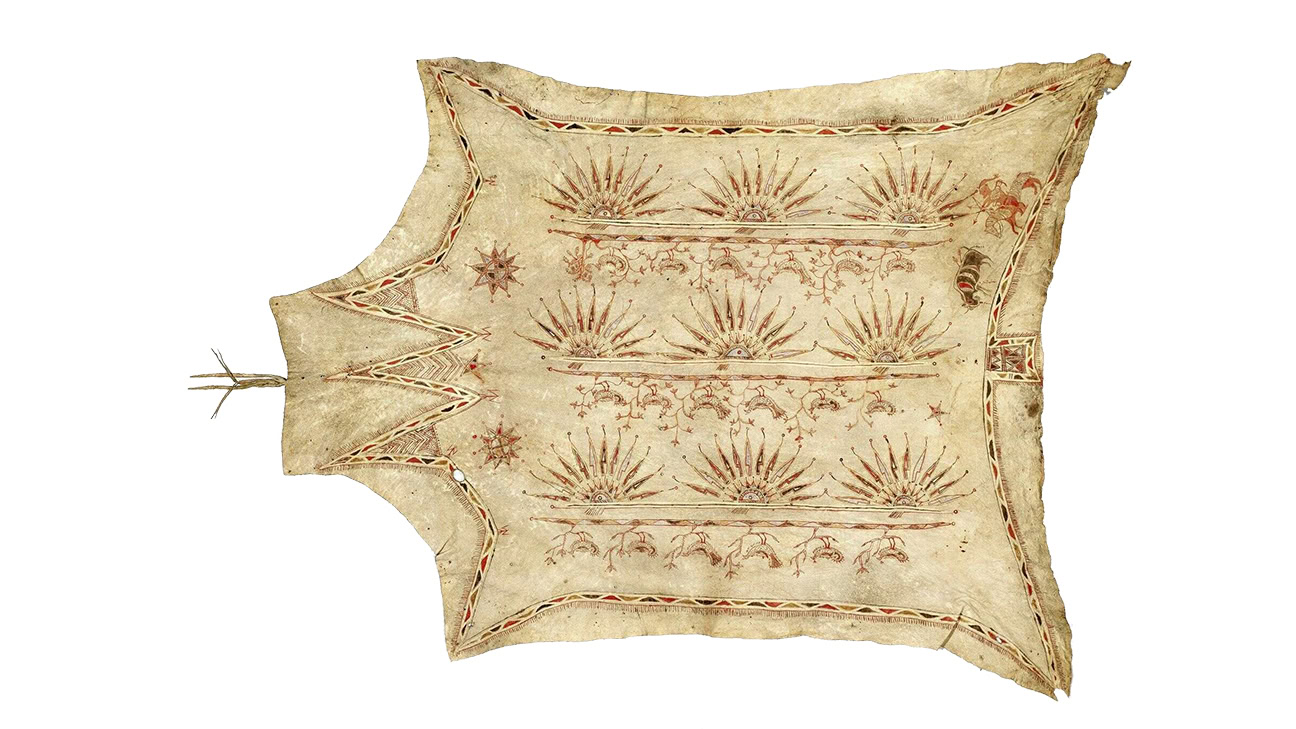
Painted hide in the collection of the Musée du Quai Branly Chirac #71.1934.33.5D
Painted Hides: Continuing Collaborations with the Musée du Quai Branly – Jacques Chirac
Iti FabvssaPublished June 1, 2026By Choctaw Nation Historic Preservation Staff
This month, Iti Fabvssa shares more information from the one-of-a-kind Native American cultural objects in the collection of the Musée du Quai Branly – Jacques Chirac in Paris, France.
As a quick recap, the CNO Historic Preservation Department has been partnering with the Branly and with other Tribes to document, study, and connect this collection with culturally affiliated Tribal communities since 2017.
In 2024, some of the items in this collection, which have a fair likelihood of being Choctaw in origin, were displayed at the Choctaw Cultural Center in Calera. Thousands of people came to see them.
The Branly collections include an assemblage of Native American painted hides that is like no other collection in the world. These hides, dating to the 1700s, come from Tribes in the central and southeastern US. They are skins of bison, deer, and possibly other animals that were skillfully dressed and softened, then painted with designs that made them beautiful and conveyed important meanings. The painted hides were worn as robes, used for home decoration, and as gifts. These ancient hides hold a library of cultural information stored in their outlines, surface textures, toolmarks, thicknesses, and many other attributes, if you know the details to look for. I have been doing traditional hide work for most of my life and can read a few of the details in the hides. I’m honored to have been able to work with these hides in the collection and want to share the benefit of that experience with the community by detailing a few highlights in this article.
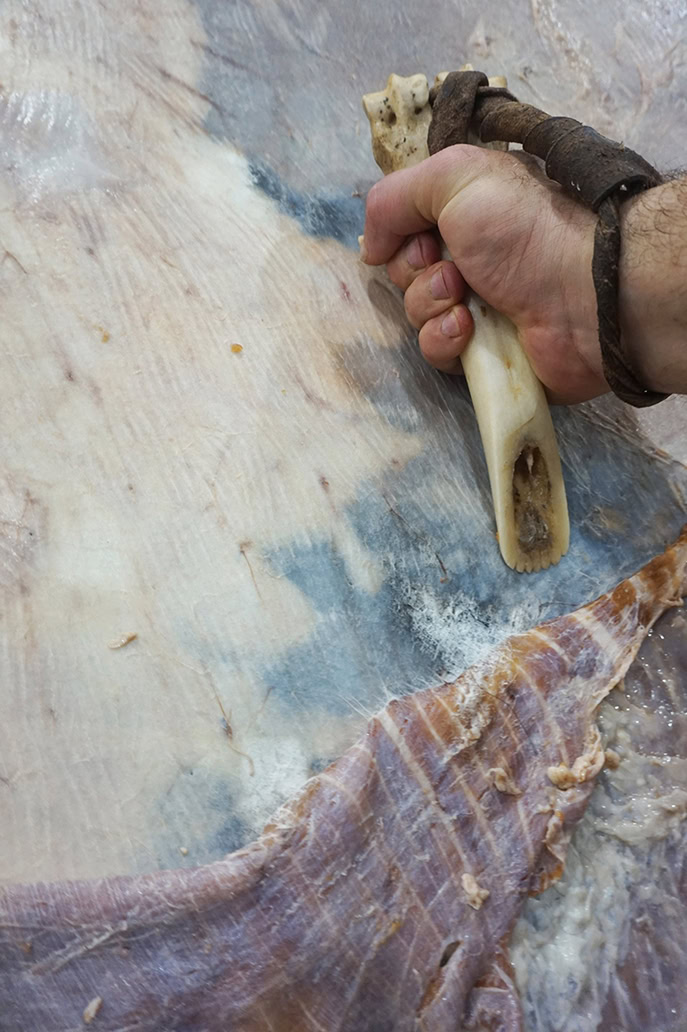
The first thing that stands out, not at all surprisingly, is the quality of workmanship that most of these hides represent. Even after 300 years, some of them are still soft and stretchy. The hides were skinned in several different ways, but all produced a finished hide with a basically rectangular outline. This is different from the way that most hunters skin today, which leaves an hourglass-shaped hide. Most of the deer hides in the Branly collection had been processed by exposing them to wood ash (which makes the softening process easier), then scraped with a flat-edged tool on a beam. Some of the bison hides have tell-tale parallel grooves on the flesh side, showing that the meat and fat were removed from the hides using a toothed flesher.
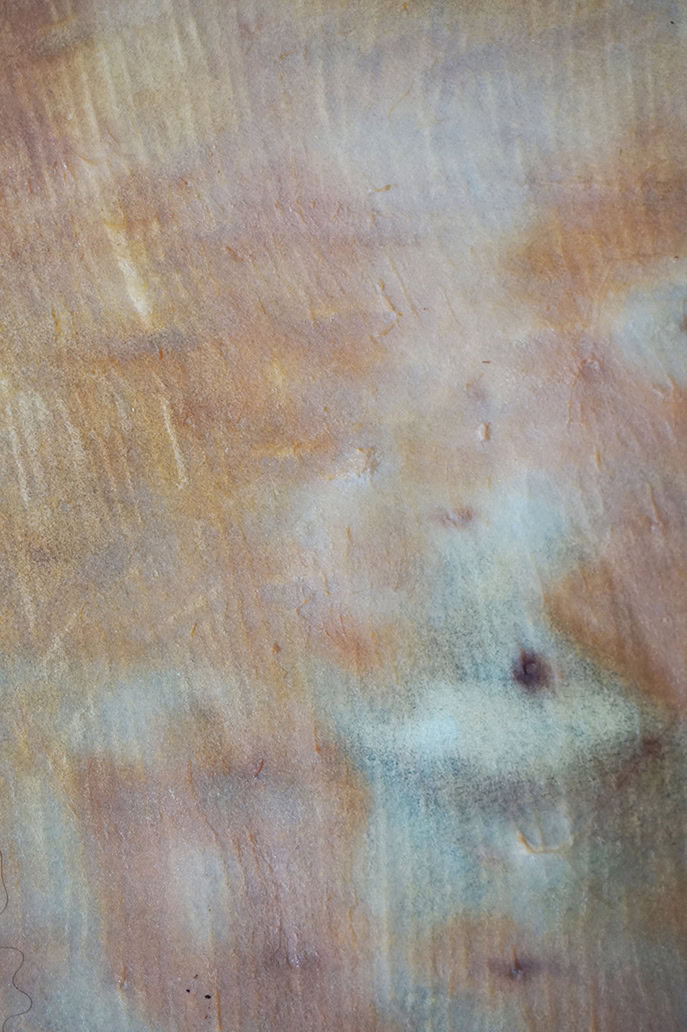
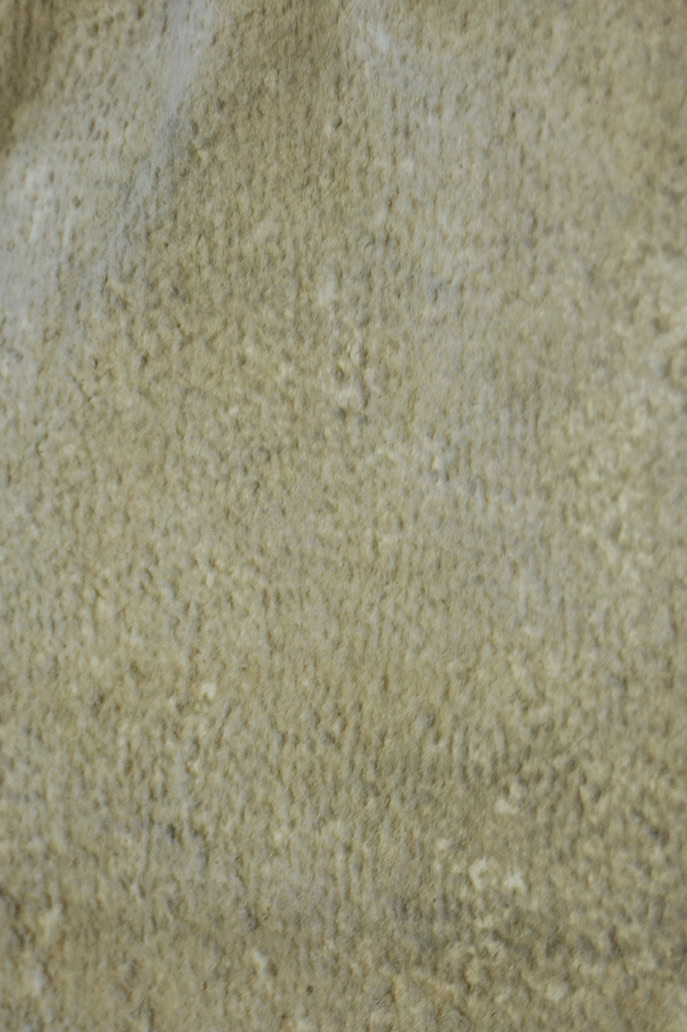
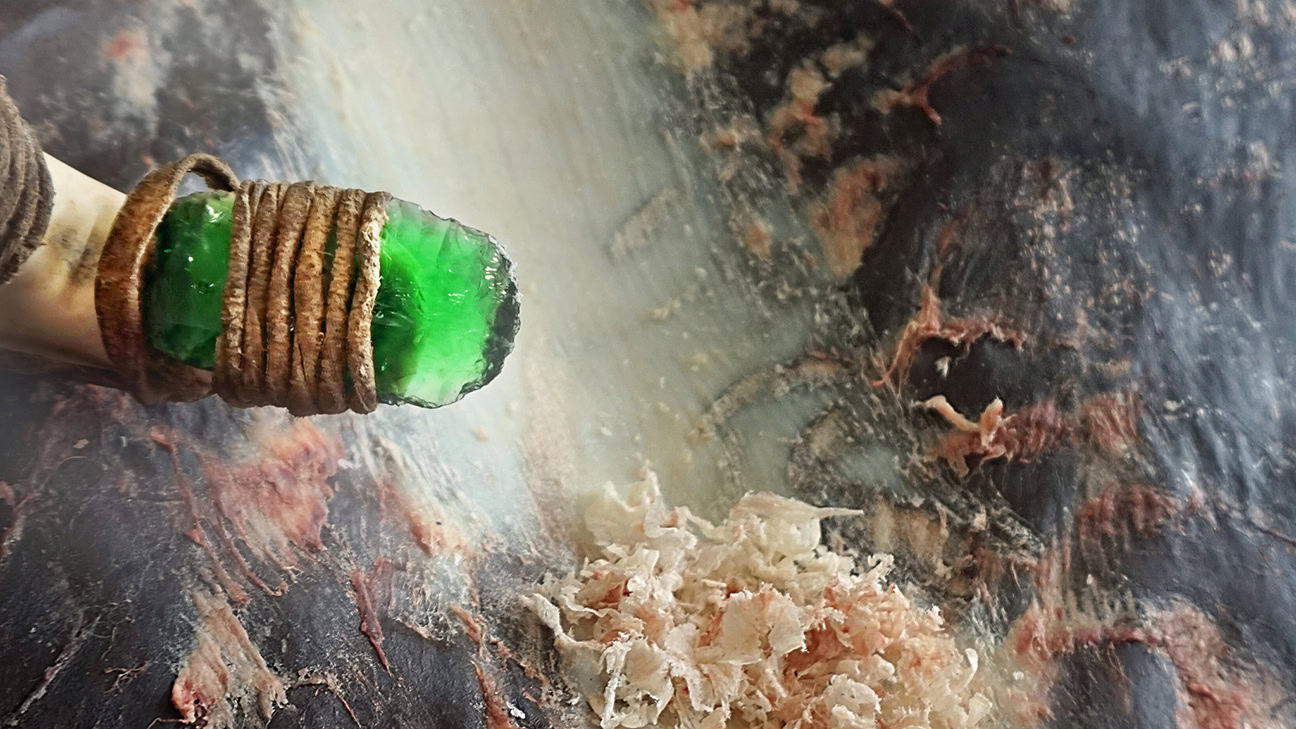
The hair side of a few hides have patches with a very rough surface. These were created by lacing the hide onto a frame and scraping portions of it with a chipped stone or chipped glass scraper blade. The latter have been found at 18th-century archaeological sites in Choctaw country, made from French glass bottles.
As part of the collaboration with Tribes, staff at the Branly found three different 18th-century French accounts about how bison robes were tanned by Mississippi tribes. The emulsified oils from the animals’ brains are the chemicals used to soften the hides. The same accounts say that hides intended for use outdoors were smoked to prevent water damage, but hides intended for indoor use were not smoked so that their natural white color would offset the painted designs like a canvas.
Many of the hides in the Branly collection fit this latter class. The paints were rubbed into the hides to make the designs. These were created by mixing hide glue with powdered mineral pigments. On the Branly hides, you can see how the artists mixed in a stronger concentration of hide glue to bind down the black pigment and keep it from smearing over the hide after the paint dried.
The majority of the hides in the Branly’s collection come from the Quapaw, Illini Confederacy, and eastern Plains Tribes. However, at least one is from the Southeast, and available evidence connects it with the Choctaw-speaking communities on Mobile Bay. This hide is from a deer. One of its designs shows the connection that Southeastern Tribes perceived between the Sun and the Sacred Fire, captured by the Choctaw term Luak Hvshtahli Itichapa “Fire, the partner of God.”
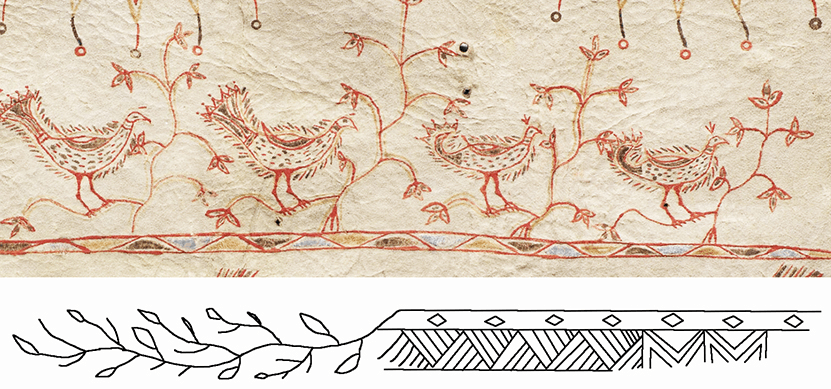
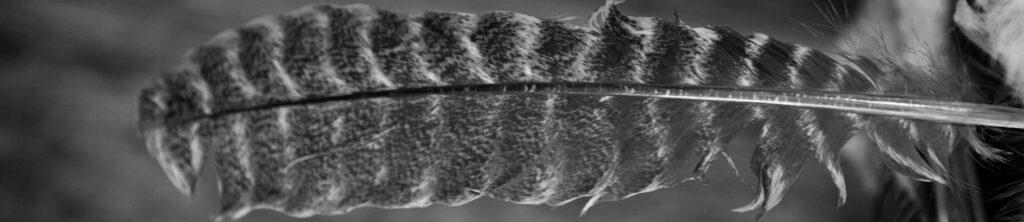
This hide’s painted design also features calumets, pipes used in ceremony and alliance-building that had rosettes of eagle feathers hanging from them. An old Choctaw concept is that the sun was God’s eye watching the earth. The way that the rosettes of feathers are shown on the hide resembles the rays of the sun, with an eye depicted at the center. Choctaw people traditionally conceived of the sun as God’s eye watching the earth. On this painted hide, the depiction of the eye is done in the same way that Choctaw-speaking potters on Mobile Bay depicted the eye on ceramics during the 1600s and early 1700s.
In addition to the calumets, the other main part of the design on this hide consists of birds sitting in greenery. We don’t know the meaning of that part of the design, but the way that the greenery is depicted closely matches the design on a Choctaw pipestem dating to the 1700s. We don’t know for certain if this painted hide was created by Choctaw artisans, but it certainly has a lot of Choctaw cultural and visual connections. Because of these connections, this hide traveled from France to be on display at the Choctaw Cultural Center for 6 months in 2024. We hope that you got to see it, and that this article provides some more cultural background to that experience.
In the coming months, the Choctaw Nation Historic Preservation Department will keep working to make the Branly collection’s traditional knowledge more accessible.