

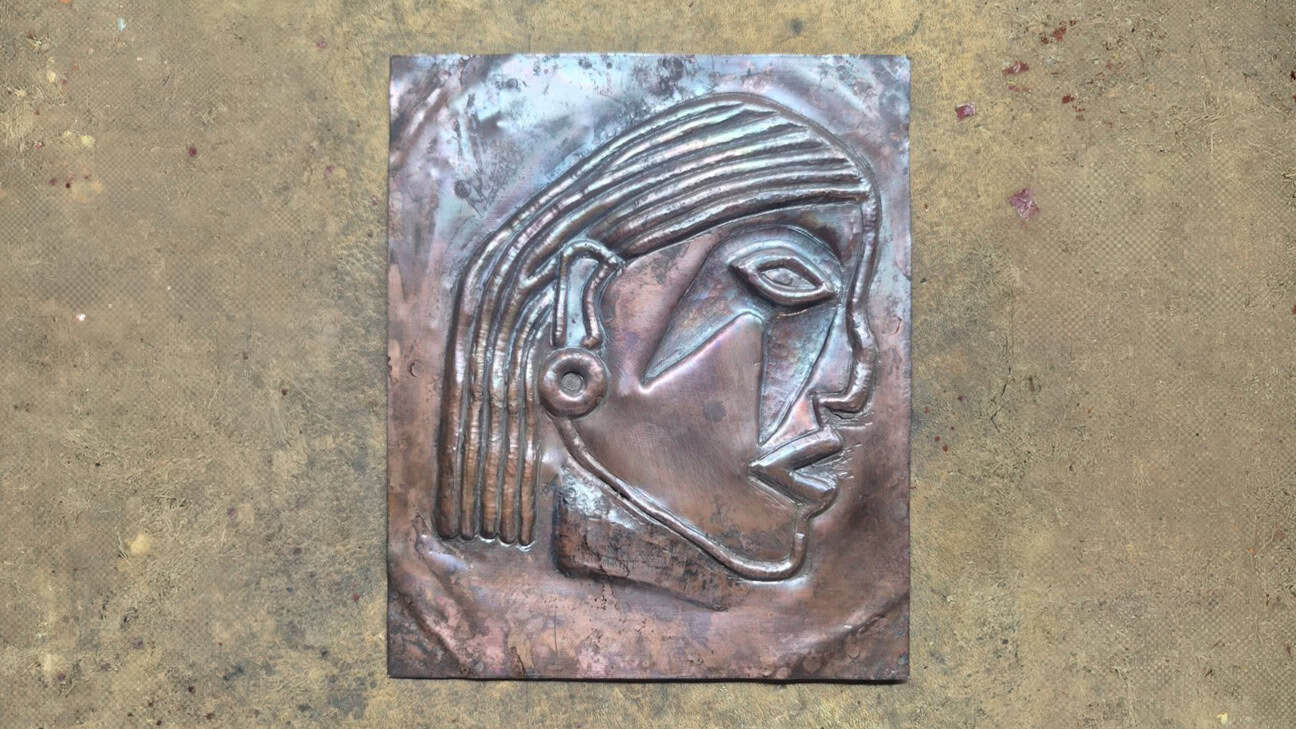
Brief History of Choctaw Copper Work
Iti FabvssaPublished September 1, 2026By Colt James, Guest Writer
One resource, that many people may not know, Native American peoples utilized pre-European contact was copper. Copper had a variety of uses by many tribes on the North American continent. Choctaws were one of these tribes, although it is not natural to us. The deposits in the Lake Superior basin are the largest, richest, and best known, which is where most of the copper came from, along with some smaller deposits in the Appalachian Mountains and in Nova Scotia. Through the extensive trade network, it made its way throughout the North American continent. Items such as knives, arrowheads, spear points and fishing hooks, along with many other tools, were also made with copper and used during this time. Other items, such as jewelry and ceremonial items, were also made and used later on. (Ehrhardt 2009).
The copper that was found was called Native Copper and was up to 99% natural, pure, metallic copper. The copper was exposed to the surface due to erosion from the movement of the glaciers from the last ice age. Two main ways of harvesting would be mining from the ground or collecting float copper. Copper veins embedded in bedrock would be exposed at or near the surface due to glacial movement; the people of the Great Lakes region would mine them, creating deep ,oval-shaped pits in the process. They could have also used a method called fire setting, a process where a very hot fire is made on top of the rock and is then quickly quenched with water, which causes the stone to break or crack and become easier to excavate. Float copper is chunks of copper that were moved by the glaciers to a new location on the surface. These nodules can range in a variety of sizes from small nuggets up to large flat boulders that weigh several tons. Float copper is easier to collect and harvest; however, the amount of copper in the area is inconsistent (Peterson, 2025).
The Mississippian Copper Culture refers to the Midcontinent, Eastern and Southeastern tribes that used copper from 1,000 BC until European contact in the 1500s AD (Ehrhardt 2009). Copper began reaching this area by trade; some of the major Mississippian trade hubs were Cahokia (Illinois), Moundville (Alabama), Etowah (Georgia) and Spiro Mounds (Oklahoma). At this time, the number of people using copper tools decreased significantly as people did not want to wait several months or possibly years for new copper tools to arrive when stone, bone or other materials worked just as well. However, the Mississippian tribes were using copper to create jewelry, ceremonial items and artwork. Copper was not a common resource in this area; because of this, it was mostly reserved for people higher up in society, showing their social status, with some smaller items making their way to people of proven status in the community. Some of these items are earrings, bracelets, arm bands, beads, head pieces, plaques and more. Many of these items were decorated with styles and designs for that person or of that tribe (Ehrhardt 2009).
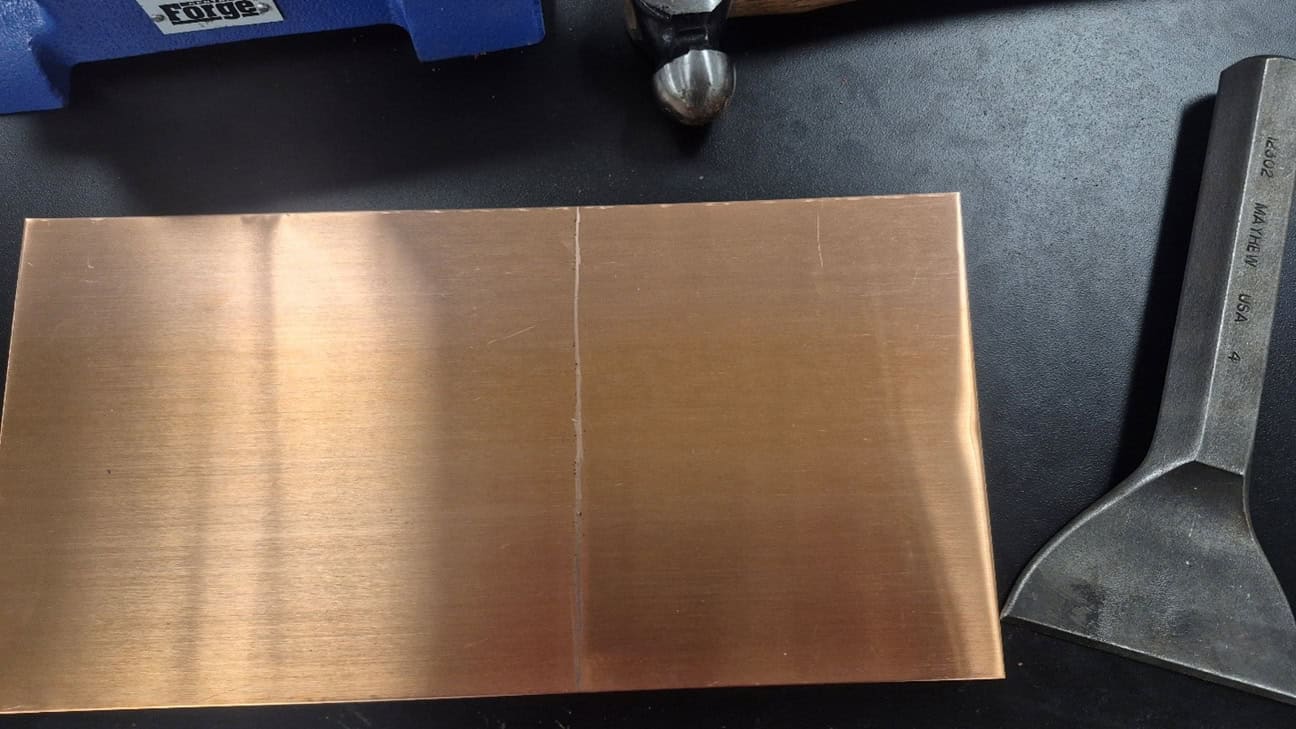
Copper is a very soft metal compared to others when in its purest form. Because of this, Native American people did not have to resort to smelting to extract copper for use. They would process the raw copper pieces by using cold hammering techniques; through this process, they would hammer the copper while it is at room temperature to form it into sheets or their desired shape. After hammering for some time, the copper will start to work harden and become harder and more brittle. To solve this, they would anneal the copper piece to soften, making it workable again. To do this, they would set the piece into a fire or activated coals for up to several hours until the copper reaches a glowing cherry red. Once this is reached, then the copper can continue to be worked on. To cut the copper, they would hammer a stone blade to create indentations on both sides of the piece they wanted to cut, then wiggle it back and forth until the piece broke off. Another way of cutting is using multiple stone blades, like saws, as well. Sandstone or other rough-grain stones were rubbed on the edge of the piece until it was smooth. Other techniques that would be used to create designs are chasing and repousse to create copper plaques, for example. In this process, they would use tools made from bone, antler, stone or wood to create indentations into the metal from the front and the back of a copper plate. These copper plates could depict different images from Mississippian legends, stories, or of that person’s life (Peterson, 2025).
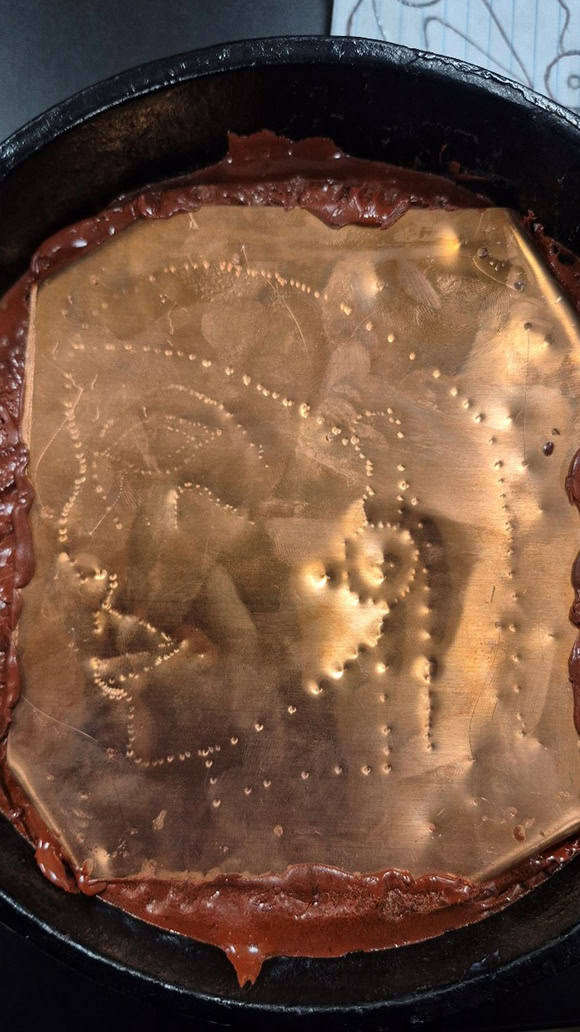
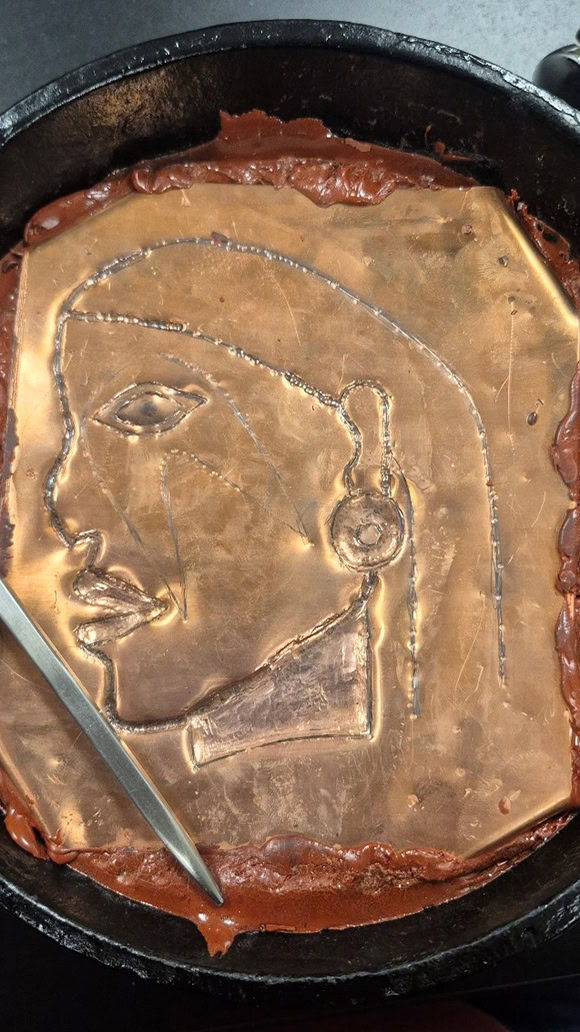
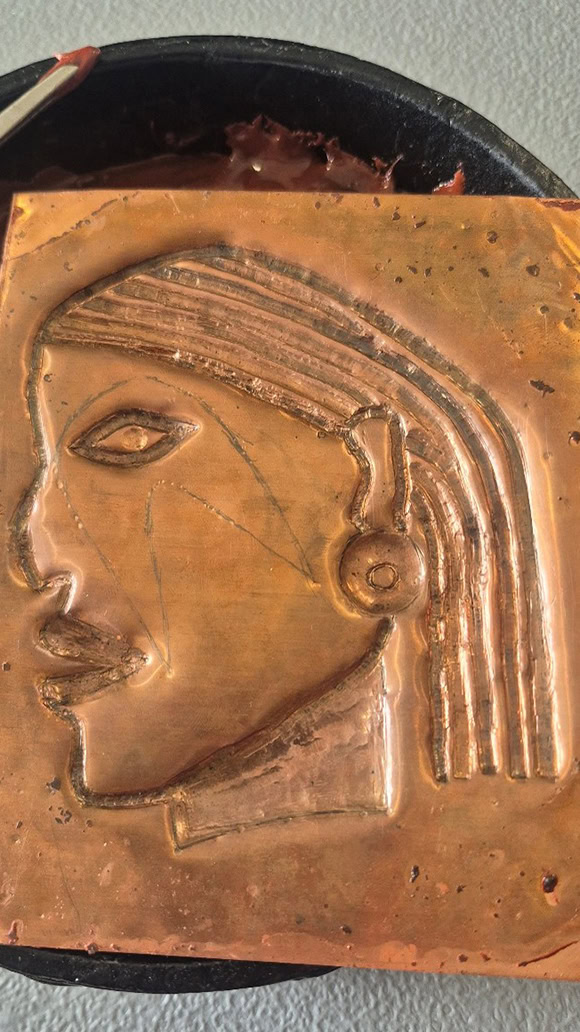
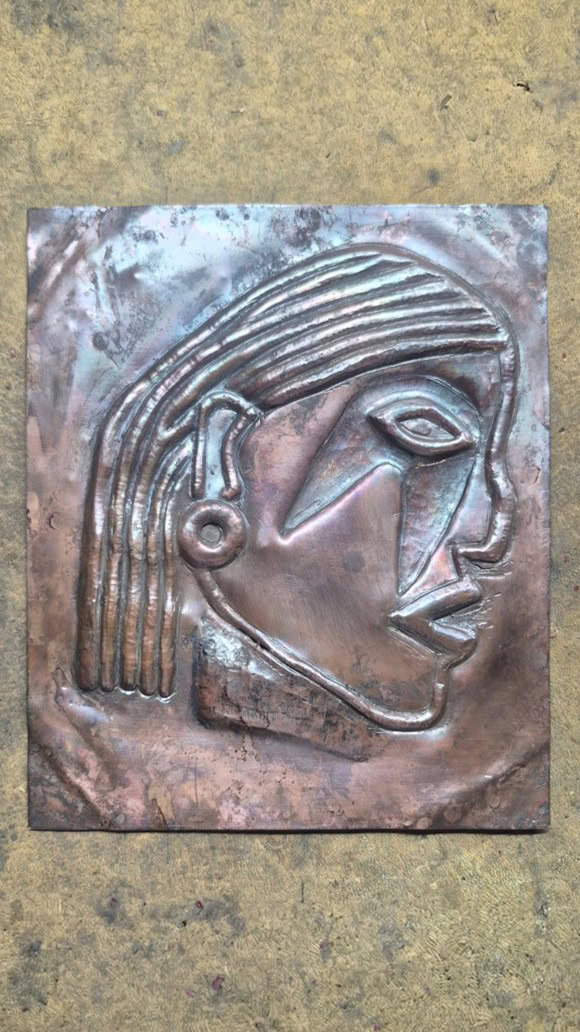
This is a very brief overview of the Mississippian Copper culture, from where it was mined and collected in the Great Lakes to make its way through trade to the Mississippian Societies, and some of its uses throughout. The development of mining, trade networks and metalworking techniques demonstrates the skill and innovations of Native American people across North America. Although its uses changed over time, copper remained a valuable resource that reflected both practical needs and social significance.
Many copper items we can study, unfortunately, come from burials. Early archaeologists and collectors would dig into burials and cemeteries to study the remains of native people or to collect the objects buried with them.
Writer’s Note: Studying and researching these items from burials leads me to moral conflict. From my perspective as a Choctaw Artist, I would very much like to learn about the work our ancestors did and the process to keep the art form alive and not forgotten. However, I also believe these funerary items should only be seen and known by the people who made them and the ones they were buried with. I feel that when working with copper in this context, any designs that come from a burial should not be recreated. Inspiration can be taken from these pieces, but a one-to-one copy should never be made out of respect for the original creators and those they were buried with.
Works Cited
- (Ehrhardt 2009) Ehrhardt, K. L. (2009). Copper working technologies, contexts of use, and social complexity in the Eastern Woodlands of Native North America. Springer.
- (Peterson, 2025) Ryan Edward Peterson (2025) Miskwabik’s Journey Beyond Minong: The Life History of Native Copper Production Among Archaic Hunter-Gatherers in the Northern Lake Superior Basin. Chapter 6, pg. 115 – pg. 13