
Jamie L. Smith, Choctaw Nation Environmental Coordinator, took two years to painstakingly locate and photograph plants during the growing season while writing the guide during the dormant season.
Chief Talks Importance of New Choctaw Plant Field Guide
Anoli Himona yvt Yakni Ilatomba I Nan Offo Na Fehna Aivlhpesa ya Na Fehnvchi
Published June 8, 2026By Chief Gary Batton
It’s the time of year when many of us spent lots of time outside in our garden growing fruits and vegetables while adding beauty to the Reservation with flowers and plants displayed for us and our neighbors to enjoy.
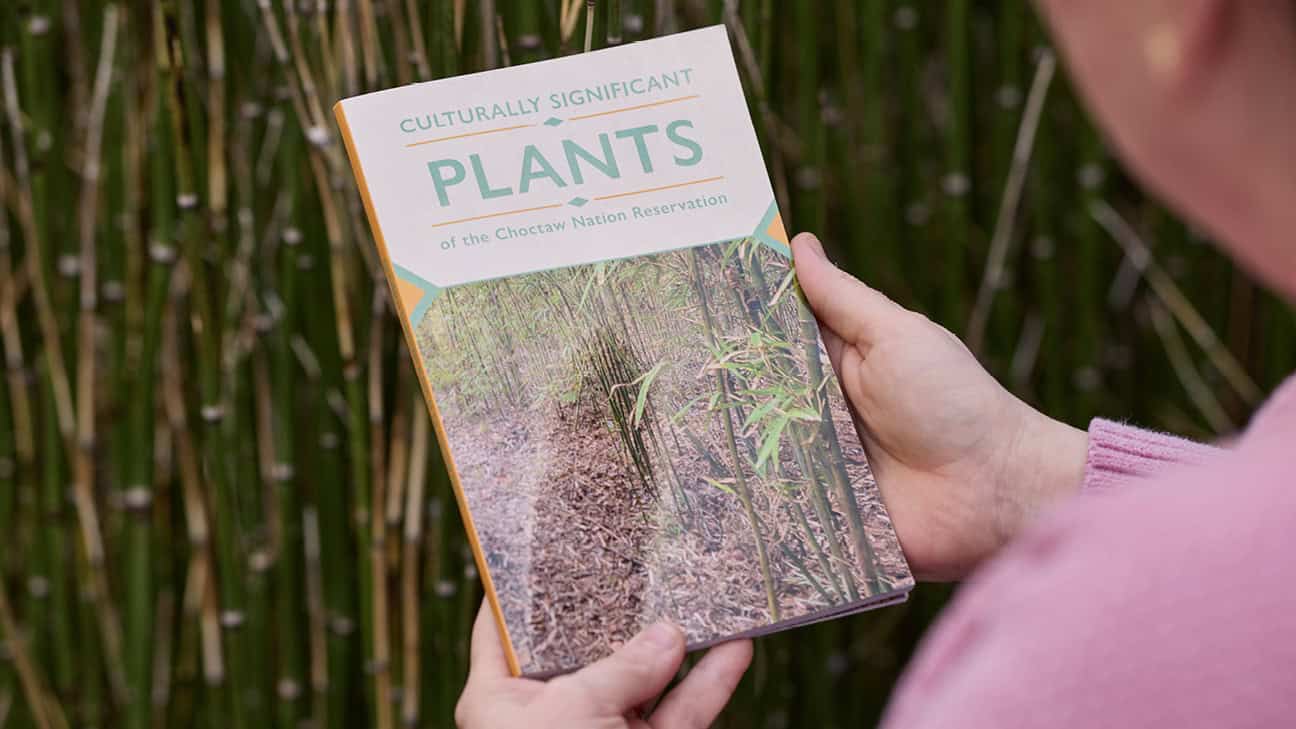
Each summer, as I drive across the Reservation, I often wonder about the plants’ meaning and tradition from a Choctaw Nation perspective. Did our ancestors grow a particular plant? What is the Choctaw Language word for a plant? Well, I’m thrilled to tell you we now have a new resource that can answer our botany and agriculture-related questions through a Choctaw Nation lens. The new Choctaw Nation publication called, “Culturally Significant Plants of the Choctaw Nation Reservation” is a community resource that combines a plant field guide with cultural knowledge and the Choctaw language to help community members identify and learn about plants that hold traditional importance.
The author of the guide, Choctaw Nation Environmental Coordinator Jamie L. Smith, took two years to painstakingly locate, photograph plants during the growing season while writing the guide during the dormant season.
“I used a variety of sources including some ethnobotanical publications which date back to the early 1900s as well as herbarium records from the 1850s,” Smith said. “Dr. Ian Thompson’s Choctaw Food books (and Dr. Thompson himself) are referenced quite a bit throughout the book as well. Our language department was also very helpful in ensuring the Choctaw words were correct and accurate.”
Smith said that while researching the project she was surprised by the many documented uses that our Chahta ancestors used the plants for. She said it was interesting to see how many ailments were said to be relieved or cured by some of the plants. It made her curious to know how those would compare to modern medicine.
“I have a biased opinion of this, but I feel the plants are extremely important to our cultural lifeways,” Smith said. “Having this information is, in a way, like holding on to a connection with our ancestors and is something we can pass on to future generations.”
Smith said since the guide has been released, she’s had conversations with many people who say they are trying to learn to forage for sustenance or medicines, and they’ve used her guide to grow that skill. From an ecological perspective, Smith is hopeful the readers will become better at plant identification and lean into the native plant movement that is slowly spreading into our area.
“Culturally Significant Plants of the Choctaw Nation Reservation” features native plants found across the reservation. The guide offers tips when harvesting or foraging in wild areas, take care to leave more plants than you pick. This helps make sure the plants continue to thrive. Copies of the field guide can be found at select Community Centers and at Choctaw Nation and community-hosted in-person events. Look for them at upcoming events or request your digital copy. The guide can also be accessed online.
It is fascinating to me all the wild grasses, herbs and plant life that our ancestral Chahta used for food, medicine and weaving. Learning more about our ancestors and what our tribe used to thrive is an interesting read and a good chance to get out into nature, exercise and learn more about the world around us. Pick up a copy today, get out there and start identifying plants that built our tribe.
Yakoke and God Bless!